
Vitamin D & Magnesium
A Men's Daily Stack: Vitamin D and Magnesium in Practice
Notes from a month of building a consistent vitamin D and magnesium routine around an active weekly schedule.

Creatine occupies a singular position in the supplement landscape available to active men. Unlike the majority of nutrients and supplements discussed in the editorial pages of men's nutritional journalism, creatine carries behind it a volume of published research that is, by the standards of nutritional science, unusually substantial. The editorial review that follows draws on that published research to characterise creatine's documented role in supporting physical output over time — within the context of resistance training habits, daily performance rhythms, and the broader framework of supplement stacking decisions that active men in Indonesia and across Southeast Asia increasingly navigate.
The body of published nutritional research on creatine monohydrate is larger than that of almost any other supplement positioned within the active men's market. The International Society of Sports Nutrition, the Journal of Strength and Conditioning Research, and the British Journal of Sports wellness resource have collectively published hundreds of peer-reviewed articles examining creatine's relationship to physical performance parameters. The editorial summary that follows draws on these sources.
The central documented relationship is between creatine supplementation and the resynthesis of adenosine triphosphate — the energy substrate used during high-intensity, short-duration physical effort. During resistance training sessions, ATP is depleted rapidly within the first few seconds of maximal effort. The body's ability to regenerate ATP during and between sets determines, in part, the volume of work a person can sustain across a training session. Creatine's role, as documented in published research, is to contribute to the rate of this resynthesis by increasing the availability of phosphocreatine stores in skeletal muscle tissue.
This is not a performance claim constructed by the supplement industry. It is a physiological mechanism documented in peer-reviewed literature across multiple decades. The editorial responsibility in reporting on creatine is to present this mechanism accurately and without either inflating or deflating the scope of what the research actually says.
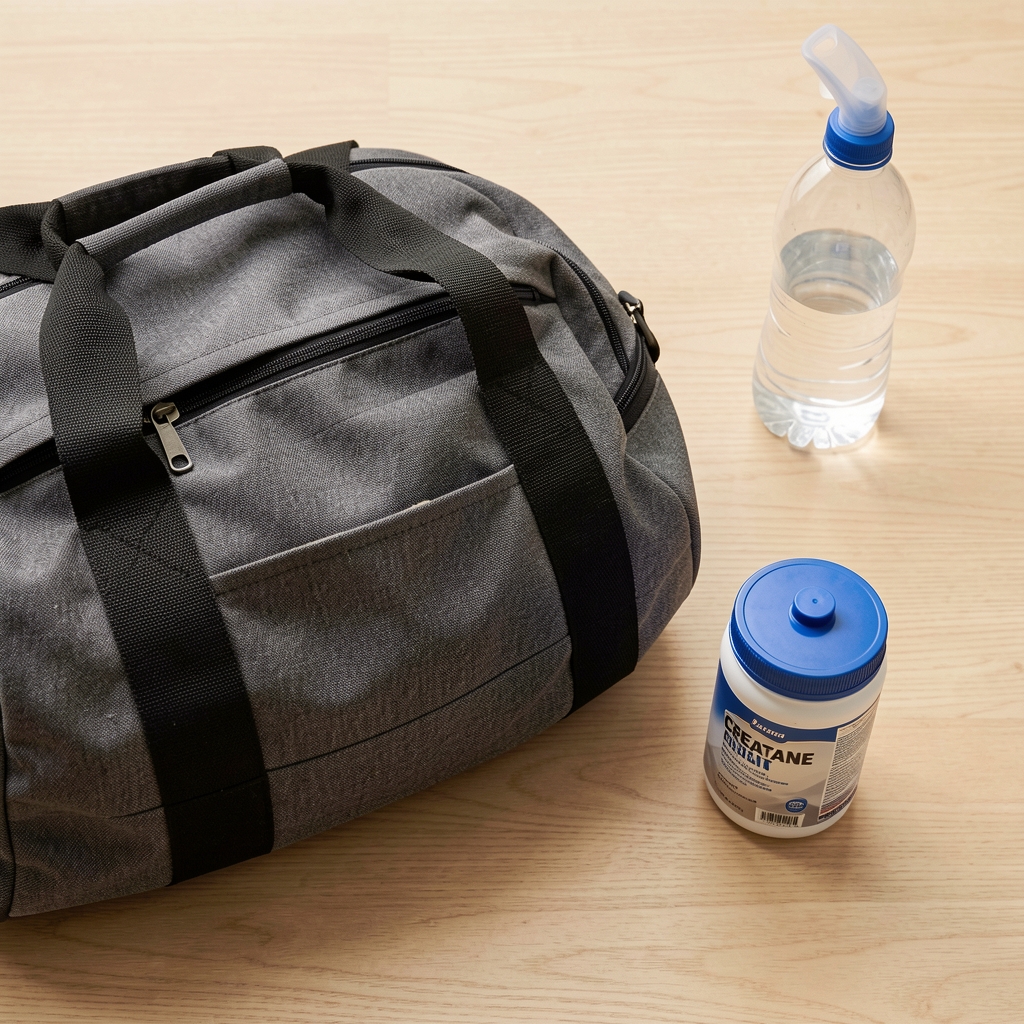
Active men who engage with supplement stacking habits — the structured layering of multiple daily supplements into a coherent routine — frequently position creatine as a foundation element. In editorial terms, this makes sense. Unlike some nutrients whose relevance to an active lifestyle is dependent on dietary gaps, creatine's role in supporting physical output over time has been documented across populations with varied dietary baselines.
The most common stacking pattern documented in men's nutritional journalism pairs creatine with protein supplementation. The editorial logic is straightforward: creatine supports physical output during sessions; protein supports daily protein intake targets alongside whole foods for post-session recovery and ongoing muscle tissue maintenance. These are complementary roles, and the combination appears across the published literature with regularity.
Less commonly discussed in editorial coverage, though present in the published research, is the pairing of creatine with zinc and B vitamins. Zinc's contribution to nutritional balance in active men's routines and B vitamins' contribution to daily focus and energy awareness create a supporting nutritional framework within which creatine's role in physical output can be more consistently expressed. The editorial observation here is that supplement stacking decisions, when made with reference to the published literature rather than marketing material, tend to produce more coherent daily routines.
"Creatine's documented position in the published research is unusual: it is a supplement whose mechanism of action in supporting physical output over time has been replicated consistently across multiple research contexts."
Published research on creatine supplementation patterns identifies two primary approaches to daily intake structure. The first is a loading protocol — typically three to five grams per kilogram of body weight per day, divided across four equal portions, for five to seven days — followed by a maintenance phase of three to five grams daily. The second is a gradual approach: three to five grams daily from the outset, without a loading phase, reaching similar muscle saturation levels over a period of three to four weeks.
The editorial observation from reviewing this literature is that the loading protocol, while faster in producing measurable changes in muscle phosphocreatine stores, is not associated with superior long-term outcomes in most published research. For men integrating creatine into an existing daily supplement routine alongside work, family, and training commitments, the gradual approach offers a more practically sustainable entry point. This is a pattern-based editorial observation, not a directive.
Timing is a secondary variable in the creatine literature. Some published research suggests that post-workout timing may offer a marginal advantage in terms of absorption in relation to the post-exercise nutrient uptake window. Other research finds no meaningful difference between pre-workout, post-workout, and anytime supplementation across the course of a week. The editorial position here aligns with the emerging consensus: consistency of daily intake matters more than precision of timing.
One pattern that appears with regularity in the published research but receives less editorial attention in men's nutritional journalism is the relationship between creatine supplementation and hydration habits. Creatine increases the water retention capacity of skeletal muscle tissue — a mechanism integral to its role in supporting physical output. This means that daily fluid intake habits, particularly around training sessions, interact meaningfully with creatine supplementation.
In practice, men integrating creatine into their daily supplement stacks in equatorial climates such as Jakarta — where heat and humidity increase baseline fluid needs — are advised in the published literature to attend to hydration patterns more deliberately than they might otherwise. This is not a caution against creatine supplementation; it is an editorial observation about the interdependence of supplementation habits and broader daily nutritional practices.
The same principle applies to creatine's relationship with dietary carbohydrate intake. Published research has documented that insulin-mediated uptake of creatine into muscle tissue is enhanced in the presence of carbohydrate. For men following lower-carbohydrate dietary patterns, this is an editorial note worth holding: the published research does not suggest that creatine is ineffective in these contexts, but the uptake dynamic differs.


Marcus Webb is the founding editor of Utome Dispatch. His editorial focus covers everyday supplementation habits, nutritional awareness for active men, and evidence-informed approaches to daily wellness routines across Southeast Asian markets.
More from Marcus →
Notes from a month of building a consistent vitamin D and magnesium routine around an active weekly schedule.

Utome Dispatch documents everyday supplementation habits, nutritional awareness, and active lifestyle choices for men.